A cochlear implant combines equipment worn outside the body with a receiver-stimulator and electrode array placed inside it, so a device quote can be difficult to interpret. By the end, you will be able to identify each part, compare meaningful specifications, understand daily maintenance and MRI precautions, and prepare focused questions for an implant team.
Key takeaways
- The processor, microphone and transmitter are external; the receiver and electrode array are implanted.
- Compare MRI conditions, battery options, warranty terms and replacement support before choosing a system.
- Cochlear implants suit severe-to-profound hearing loss when hearing aids provide limited benefit.
- Ask about candidacy testing, surgery, activation, rehabilitation and long-term device support.
What are the external and internal parts of a cochlear implant?
A cochlear implant has an external sound system and an implanted stimulation system; they work together but are not interchangeable with hearing-aid parts. For patients researching cochlear implant components in nashik, location matters: external parts sit on or around the ear, while internal parts sit beneath the skin and inside the cochlea.
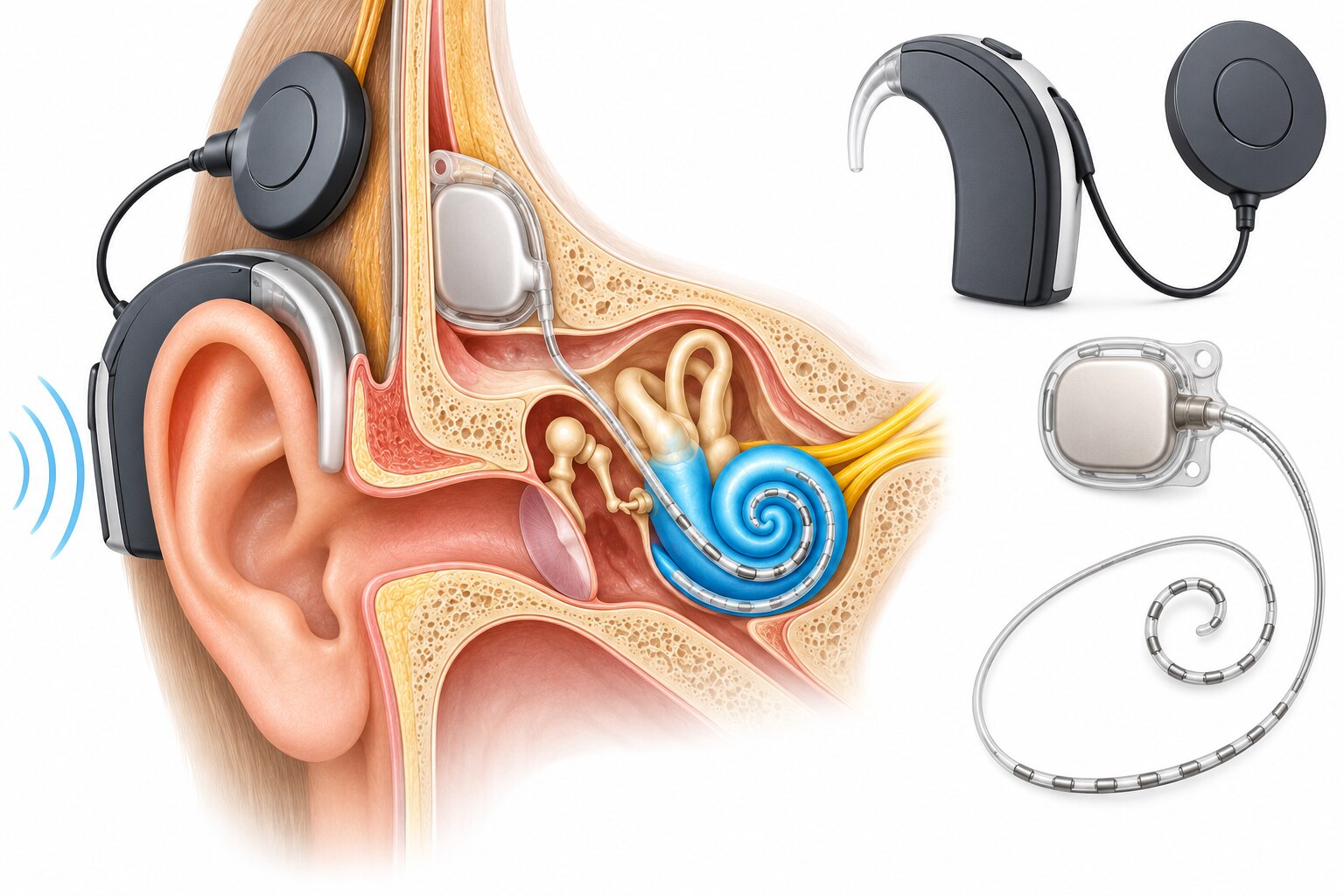
- External system: one or more microphones capture sound; the speech processor analyses it; controls adjust settings; indicator lights show power or faults; and a disposable battery or rechargeable power source supplies energy.
- External connections: cables carry coded signals to the transmitter coil. The coil contains a magnet that aligns with the internal magnet beneath the skin. Clips, headbands and ear hooks help retain the equipment.
- Internal system: the receiver-stimulator sits permanently beneath the skin behind the ear; an internal magnet holds the coil; a lead connects the receiver-stimulator to the flexible electrode array inserted into the cochlea. Some designs also include a reference electrode.
- The receiver-stimulator is implanted permanently unless a clinical problem requires revision. The processor and coil remain outside, so they can be removed, repaired or replaced.
The electrode array does not create normal biological hearing. It delivers patterned electrical stimulation to surviving auditory-nerve fibres at multiple cochlear locations. Unlike a hearing aid, which amplifies acoustic sound, this system bypasses damaged inner-ear sensory cells; that distinction clarifies cochlear implant internal external parts in nashik.
How does sound travel through the device, and what happens during daily use?
One sound follows a defined path: the microphone captures it, and the speech processor analyses it into coded signals. A cable carries those signals to the transmitter coil, which sends them across the skin to the receiver-stimulator.
The receiver converts them into electrical pulses that travel through the lead to contacts on the electrode array, stimulating auditory-nerve fibres in the cochlea so the brain can interpret the signal.
1. Charge the rechargeable processor or insert fresh disposable batteries as instructed. The implanted receiver-stimulator has no internal battery.
2. Centre the coil over the internal magnet beneath the skin. Poor alignment can cause intermittent sound, beeps or complete signal loss.
3. Understand activation correctly: mapping sets stimulation levels and processing parameters. Activation is not simply switching on a finished hearing system; programming is adjusted as listening develops.
4. Remove or protect the processor for bathing, swimming, dusty work and impacts according to its exact accessory rating. Use clips for exercise, school or work, and follow your team’s instructions for sleep and air travel.
5. Ask about a backup processor. Removing, losing or damaging the external unit, or exhausting its battery, leaves the implanted parts in place but prevents intended hearing benefit until a compatible, programmed processor is available. This pathway helps when comparing cochlear implant parts in Nashik.
Which cochlear implant device specifications and documents deserve comparison?
Compare exact models, not a generic brand specification, when reviewing cochlear implant device specifications in Nashik. Request the internal receiver-stimulator model and external processor model in writing.
| Internal model and processor model | Confirms compatibility for upgrades, software and accessories |
|---|---|
| Processor size, weight and microphones | Shows wearing comfort, microphone coverage and handling needs |
| Battery type and runtime | Separates disposable batteries from rechargeable packs and identifies charging demands |
| Water protection and immersion rating | Defines what the processor, battery case and approved covers can tolerate |
| Wireless, remote control and accessories | Confirms phone, television, remote and retention-device compatibility |
| Warranty and local repair route | Shows who handles faults, replacement parts and processor downtime |
Do not treat electrode-contact or channel count as a direct hearing-quality score. Programming determines which electrodes are active, stimulation levels and how sound is coded.
Keep the implant identification card and MRI card supplied after surgery. MRI rules differ by model: check field strength, magnet instructions, head wrapping, magnet removal and other limits. Remove the external processor before scanning unless the device instructions explicitly permit it, and show the card to the radiology team before booking.
The same model details matter for revision surgery, processor upgrades and urgent troubleshooting. External compatibility depends on the implanted receiver-stimulator, software and approved accessories, so ask what happens if the processor is lost, discontinued or fails locally.
Who benefits from a cochlear implant, and how does it compare with other choices?
An implant fits your hearing pathway only after an implant team reviews the degree and type of loss, benefit from appropriately fitted hearing aids, speech-perception scores, cochlear anatomy, auditory-nerve status, age, medical fitness, communication goals and willingness to attend mapping and rehabilitation.
Mild or moderate loss managed well with hearing aids is a poor reason to choose surgery.
When comparing cochlear implant components in Nashik, compare the pathway, not just the device:
| Choice | How it works | When it fits |
|---|---|---|
| Hearing aid | Amplifies acoustic sound through the ear | Usable inner-ear function; avoids implantation but requires battery or charging care |
| Bone-conduction device | Routes sound through skull vibration | Selected outer- or middle-ear problems |
| Middle-ear implant | Mechanically drives middle-ear structures | Different candidacy and surgical trade-offs |
| Cochlear implant | Bypasses damaged sensory cells and electrically stimulates the auditory nerve | Limited hearing-aid benefit with suitable anatomy and nerve function |
Choosing no device avoids surgery and maintenance but leaves the hearing loss untreated. An implant is not a larger hearing aid, and activation does not restore natural hearing immediately. Speech understanding develops through programming, daily listening practice and rehabilitation; nerve status, duration of deafness and communication support shape the result.
What will the Nashik patient journey, time commitment and risks involve?
Expect a staged pathway, not a single operation: assessment and device selection come before surgery, while hearing development continues for months through practice, programming and rehabilitation. For someone comparing cochlear implant internal external parts in Nashik, plan for these steps:
- Audiology testing, hearing-aid review and speech-perception testing.
- Imaging, medical examination and anaesthesia assessment.
- Device selection, funding or insurance discussions, then surgery.
- Wound review followed by healing before activation.
- Initial mapping, repeated programming and auditory rehabilitation.
The implant provides coded electrical input, not instant normal hearing. Plan daily listening practice, support at school or work, long-term mapping and equipment care.
Consent counselling should cover infection, device failure, skin irritation over the coil, magnet discomfort, electrode or lead problems, dizziness, tinnitus changes, facial-nerve injury and possible revision surgery. Ask how residual hearing, cochlear anatomy and electrode insertion strategy affect the recommendation.
After surgery, contact the team urgently for increasing incision redness or discharge, fever, severe dizziness, sudden facial weakness or persistent pain. During use, report repeated processor failure after checking the battery, cable and coil alignment.
Which questions should you ask an implant team before choosing a system?
Take a written quote to your Nashik consultation. It should name the exact internal implant model, external processor model, electrode-array description, included accessories, battery replacement or charging options, water-protection rating, MRI conditions, implant identification card, warranty period, repair and replacement route, emergency contact process, mapping schedule and rehabilitation support.
Ask what happens if the processor is lost, damaged or discontinued, and whether a backup unit is available locally. Confirm who handles audiology, programming, wound review and long-term follow-up.
Omkar ENT Hospital - 08042755812 can be one local starting point for evaluation or referral, but request model-specific written information from the implant team and manufacturer before consenting. Use this checklist when comparing cochlear implant parts in nashik and cochlear implant device specifications in nashik.
| Item | Ask the team to identify | Why it matters |
|---|---|---|
| Internal system | Receiver-stimulator and electrode array | Usually remains implanted during processor upgrades |
| External system | Processor, coil, cable and batteries | Can be lost, repaired or replaced |
| Failure support | Compatible backup processor and local programming | Hearing benefit stops until a working unit is supplied and programmed |
Related service
ear hearing issue by birth and in adulthood ₹700000 What is a Cochlear Implant? A cochlear implant is a small, complex electronic device that can help provide a sense of sound to individuals with... View service → |
Frequently asked questions
What are the external and internal parts of a cochlear implant?
External parts include the microphone, sound processor, battery and transmitting coil. Internal parts include the receiver-stimulator placed under the skin and the electrode array inserted into the cochlea.
How does sound travel through a cochlear implant?
The microphone captures sound, the processor converts it into coded signals, and the transmitter sends those signals across the skin. The internal receiver sends electrical stimulation through the electrode array to the auditory nerve.
Which cochlear implant specifications and documents should you compare?
Compare MRI conditions, processor water resistance, battery type and life, connectivity, warranty, repair support and upgrade policy. Ask for the model name, regulatory information, warranty document and written service terms.
Who benefits from a cochlear implant compared with a hearing aid?
A cochlear implant is considered for people with severe-to-profound sensorineural hearing loss who receive limited speech understanding from appropriately fitted hearing aids. Candidacy requires hearing tests, speech testing, imaging and medical assessment.
What does the Nashik cochlear implant journey involve?
The process includes candidacy testing, counselling, imaging, medical clearance, surgery, wound recovery, device activation and repeated programming. Listening rehabilitation continues after activation, and outcomes depend on hearing history, age, nerve function and consistent practice.